Evaluating the Fish with Stripes Seamless Pattern for Modern Design Projects
In the expansive world of digital assets and surface pattern design, selecting the right visual motif requires more than just an eye for color; it demands an understanding of how a specific style functions across different mediums. The Fish with Stripes Seamless Pattern has emerged as a distinctive option for creators seeking to blend marine themes with graphic geometry. Unlike traditional aquatic illustrations that rely heavily on realistic textures or watercolor washes, this specific style utilizes bold, stylized lines to create a rhythm that is both playful and structurally sound. For designers, scrapbookers, and product developers aged 20 to 50 who are evaluating resources for upcoming projects, understanding the unique positioning of this pattern type is essential for making an informed choice.
Defining the Aesthetic: Geometry Meets Marine Life
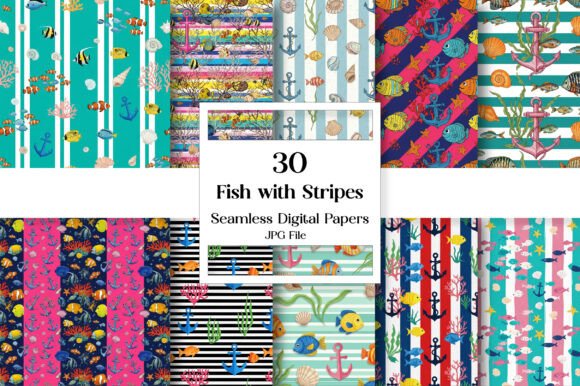
At its core, a Fish with Stripes Seamless Pattern is defined by the intersection of organic subject matter and rigid graphic elements. The "fish" component provides the recognizable silhouette and thematic connection to ocean life, while the "stripes" introduce a layer of artificial order. This combination creates a visual tension that is often more engaging than a standard pictorial repeat. The stripes serve a dual purpose: they act as decorative detailing within the illustration and as a unifying texture that helps the pattern tile seamlessly without obvious breaks.
What makes this approach distinct is its versatility in tone. While many marine patterns lean exclusively into children's nursery aesthetics with soft pastels and rounded shapes, the striped variation can be adapted to feel modern and contemporary. By adjusting the thickness of the stripes, the angle of the repetition, and the saturation of the aquatic color palette, the same underlying concept can range from a whimsical element for kids' products to a sophisticated background for lifestyle branding. The high-resolution nature of these files, typically delivered at 300 DPI, ensures that the crispness of the stripe details is maintained whether the output is a small sticker or a large-format textile.
Comparative Analysis: Striped Patterns vs. Traditional Illustrations
When comparing the Fish with Stripes Seamless Pattern against other available categories of ocean-themed designs, several tradeoffs become apparent. Designers often weigh this option against realistic vector illustrations, hand-painted watercolor repeats, and minimalist line art.
- Vs. Realistic Illustrations: Realistic fish patterns offer biological accuracy and depth but can sometimes appear busy or dated when used in large quantities. The striped alternative offers a cleaner, flatter look that scales better on digital screens and maintains legibility at smaller sizes, such as on phone wallpapers or social media graphics.
- Vs. Watercolor Textures: Watercolor styles provide a soft, organic feel that is excellent for wedding stationery or gentle nursery decor. However, they lack the graphic punch required for high-energy summer collections or bold packaging. The striped pattern fills this gap by providing high contrast and a "pop" that grabs attention immediately.
- Vs. Minimalist Line Art: Simple outline fish are trendy and understated but may lack the visual weight needed for sublimation products or fabric design where coverage is key. The inclusion of bold stripes adds density to the design, making it more suitable for applications where the pattern needs to stand out against competing visual noise.
The decision often comes down to the intended energy of the project. If the goal is calmness and subtlety, a textured or realistic approach may be superior. However, for projects requiring vibrancy, movement, and a modern graphic sensibility, the striped fish motif offers a compelling middle ground that retains character without sacrificing clarity.
Practical Applications and Best-Fit Scenarios
The utility of a Fish with Stripes Seamless Pattern extends far beyond simple background decoration. Its structured yet playful nature makes it particularly effective in specific industries and use cases where brand recognition and visual appeal are paramount.
Textile and Fashion Design
In the realm of fabric and textile design, seamless repeats are the industry standard. The striped fish design excels here because the linear elements help disguise the seams where the pattern tiles, creating a continuous flow that looks intentional rather than repetitive. This is ideal for summer clothing lines, beachwear, and even home decor items like throw pillows or shower curtains. The boldness of the stripes ensures the pattern remains visible even when the fabric is draped or folded.
Packaging and Product Branding
For businesses developing ocean-marine-themed branding, this pattern offers a fresh alternative to the overused anchor and wheel motifs. It works exceptionally well for wrapping paper, box liners, and labels. The graphic quality translates well to various printing methods, including digital offset and flexography. For sublimation products like tumblers or phone cases, the high-contrast colors of the striped fish ensure the image does not get lost during the heat transfer process.
Digital and Stationery Uses
In the digital space, these patterns are highly effective for planner covers, journaling cards, and scrapbooking layouts. The defined shapes make it easy for crafters to cut out individual fish elements for layering, while the seamless background provides a cohesive base for pages. Furthermore, for social media managers looking to refresh their feed during summer campaigns, these assets provide a ready-made theme that feels curated and professional without requiring custom illustration work.
Limitations and Decision Factors
While the Fish with Stripes Seamless Pattern is a robust resource, it is not a universal solution for every design challenge. Potential users must evaluate certain limitations before committing to this style.
Contextual Fit: The playful and energetic vibe of striped fish may clash with brands aiming for a luxury, serene, or ultra-minimalist aesthetic. If a project requires a sense of deep oceanic mystery or high-end elegance, the cartoonish or graphic nature of the stripes might feel too casual. In such cases, a monochromatic sketch or a photographic texture would be a more appropriate alternative.
Color Dependency: The success of this pattern often relies heavily on the color palette. Because the design depends on the contrast between the fish body and the stripes, low-contrast color combinations can render the pattern muddy or indistinct. Users should ensure that the chosen file offers a bright, aquatic color palette or possesses the flexibility to be recolored easily if their brand guidelines require specific hues.
Scalability Concerns: Although high-resolution JPGs are standard, extremely fine stripe details can sometimes suffer when scaled down significantly for small tags or favicons. Designers should always test the pattern at the final output size to ensure the stripe definition remains sharp and does not blur into a solid mass.
Making the Final Choice
Selecting the right asset for a creative project is a balance of aesthetic preference and functional requirement. The Fish with Stripes Seamless Pattern represents a specific niche within the broader category of marine design—one that prioritizes energy, clarity, and modern graphic appeal. It is an excellent choice for those targeting younger demographics, creating summer-centric collections, or needing a versatile background that works across both print and digital platforms.
However, it is equally important to recognize when this style is not the best fit. For projects demanding photorealism, subtle texture, or a somber tone, exploring alternative categories like watercolor washes or detailed engravings would yield better results. By critically assessing the project's goals, the target audience, and the medium of delivery, creators can determine if the vibrant, striped approach aligns with their vision. Ultimately, the value of this pattern lies in its ability to bring a fresh, eye-catching dynamic to designs that need to stand out in a crowded visual landscape, provided it is applied with an understanding of its inherent strengths and stylistic boundaries.