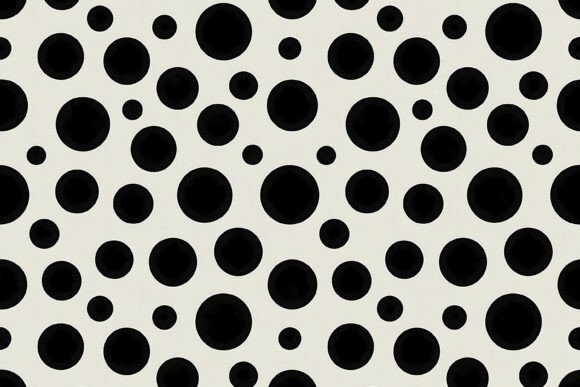
Mastering the Seamless Minimal Polka Dot Pattern for Professional Design
The allure of a Seamless Minimal Polka Dot Pattern lies in its deceptive simplicity. At first glance, it appears to be nothing more than black circles on a white background, or perhaps the inverse. However, for designers, entrepreneurs, and creators looking to elevate their projects, this geometric staple offers far more than just a basic texture. When executed correctly, specifically with high-resolution assets like a 5760x5760px vector file, it becomes a versatile foundation for everything from Scandinavian-inspired home decor to trendy fabric lines. Yet, many users stumble not because the design is flawed, but because they misunderstand how to select and apply these patterns effectively in a professional workflow.
One of the most frequent errors beginners make is overlooking resolution and scalability. In the digital age, it is tempting to grab the first free image found online, but low-resolution raster files are a recipe for disaster. If you attempt to scale a small 72 DPI JPEG for a large format print, such as a wallpaper mural or a trade show backdrop, the result will be pixelated and unprofessional. This mistake directly impacts the perceived quality of your brand or product. Instead, always prioritize vector art or ultra-high-resolution PNGs. A true seamless minimal polka dot pattern should be infinitely scalable without losing the crisp edges of those perfect circles. By starting with a robust 5760x5760px source file, you ensure that whether you are printing on silk or applying the design to a mobile app interface, the clarity remains intact.
Avoiding the Trap of Poor Tiling and Visible Seams
The term "seamless" is often thrown around loosely in stock marketplaces, leading to significant frustration during the production phase. A common misunderstanding is assuming that any repeating image is automatically tileable. In reality, many patterns have hard edges that create visible grid lines when repeated, breaking the illusion of an infinite surface. This is particularly damaging in web design or fabric manufacturing, where a visible seam can ruin the aesthetic flow and make a custom project look cheap.
To avoid this, you must verify the tileability of the pattern before committing to a purchase or download. A reliable method is to test the image in your design software by duplicating it horizontally and vertically. If you see a distinct line where the images meet, the pattern is not truly seamless. High-quality resources will align perfectly, creating a continuous field of dots that guides the eye smoothly across the canvas. For those creating physical products, such as upholstery or curtains, this step is non-negotiable. A poorly tiled pattern can lead to wasted material and increased production costs, as printers may struggle to align the repeat correctly.
Balancing Scale and Negative Space
Another critical aspect often overlooked is the relationship between dot size and negative space. The charm of the Scandinavian style mentioned in top-tier designs comes from a careful balance of minimalism. Novice designers frequently choose patterns where the dots are too large or too densely packed, resulting in a visual clutter that overwhelms the viewer rather than soothing them. Conversely, dots that are too small can disappear entirely when viewed from a distance or printed on certain textures.
When selecting a pattern, consider the end application. For a website background, a subtle, smaller scale often works best to ensure text readability and reduce visual noise. For fashion textiles or statement wallpaper, a bolder scale might be appropriate to create impact. Always ask yourself: Does this density support the content I am placing over it? If you are overlaying text or complex graphics, a lighter touch with more white space is usually the safer, more elegant choice. This approach ensures that the polka dots enhance the composition rather than competing with it.
Color Context and Versatility Beyond Black and White
While the classic monochrome charm of black and white is timeless and safe, limiting yourself strictly to this combination can sometimes restrict creative potential. A common pitfall is failing to consider how the pattern interacts with other colors in your palette. A stark black-and-white contrast can sometimes feel too harsh for soft, pastel-themed projects or warm, earthy interior designs.
Fortunately, a high-quality minimal polka dot pattern is easily adaptable. Because the design is fundamentally geometric and simple, it serves as an excellent base for recoloring. Professionals often take a vector-based dot pattern and adjust the hue to match specific brand guidelines or seasonal trends. For instance, swapping black dots for a deep navy or charcoal gray can soften the look while maintaining the structural integrity of the design. Before finalizing your choice, test the pattern against your primary brand colors. Ensure that the contrast ratio meets accessibility standards if used in digital interfaces, and verify that the ink coverage is suitable if used for physical printing.
Practical Applications and Workflow Efficiency
Integrating these patterns into your workflow should streamline your creative process, not complicate it. Whether you are a freelancer designing a logo, a blogger creating social media graphics, or a small business owner packaging products, efficiency is key. Using a well-constructed seamless pattern allows you to create backgrounds instantly without spending hours drawing individual elements.
- Web Design: Use lightweight, optimized versions of the pattern to add texture to hero sections without slowing down page load times.
- Fabric and Textiles: Ensure the repeat unit is sized correctly for the printing machinery to avoid misalignment during the rolling process.
- Packaging: Leverage the clean lines of the dots to create a modern shelf presence that stands out among ornate competitors.
- Interior Decor: Utilize the high-resolution files to generate large-scale murals that maintain sharpness even on expansive walls.
Ultimately, the value of a Seamless Minimal Polka Dot Pattern is determined by how well it serves your specific vision. It is not merely a decorative element but a functional tool that, when chosen with care, can unify a brand identity or transform a mundane surface into something captivating. By paying attention to resolution, verifying true seamlessness, respecting scale, and considering color adaptability, you avoid the common pitfalls that plague amateur designs. Embrace the precision of vector art and the timeless appeal of geometric simplicity. With the right resource in hand, you unlock a world of possibilities, allowing you to focus on what truly matters: bringing your unique creative ideas to life with confidence and clarity.